


Key Takeaways
- Insurance Claim HQ talks about how minor hail dings and slow pipe leaks rarely stay minor, and insurers can use months of silence about that damage as grounds to deny a much larger claim later.
- The fear that filing a claim automatically raises premiums or triggers a non-renewal is largely overstated, since a single modest claim rarely causes either outcome on its own.
- Insurance Claim HQ urges homeowners to inspect their property after every weather event and report any damage right away, rather than waiting for it to become a bigger problem.
Most homeowners insurance policies are built to respond as soon as damage occurs, not months or years down the line. In practice, that is rarely how people use them. A dented shingle after a hailstorm barely registers. A drip behind a bathroom wall gets written off as something to deal with later. Filing feels like more trouble than the damage is worth, so the repair sits untouched. Across millions of homes every year, that same small decision adds up to a lot of poorly protected property.
Galen M. Hair, founder and managing partner of Insurance Claim HQ, constantly sees the downstream effects of that decision. Damage that looks trivial at first rarely stays that way. A pipe joint weakened by corrosion can hold for a year and then let go all at once, turning a $200 fix into a flooded room and a five-figure claim. By the time a homeowner notices, the loss is bigger, and the insurer has far more ammunition to push back on paying it.
How Small Problems Turn Into Big Denials
When a carrier reviews a claim, two questions drive the decision: what caused the damage, and when did it start. A homeowner who never reported early warning signs gives the insurer an opening on that second question. If an adjuster can show that a major loss traces back to a condition that existed for months or years without being addressed, the carrier can argue that the damage falls under a preexisting condition or maintenance exclusion, two of the most commonly cited reasons for denial in the industry.
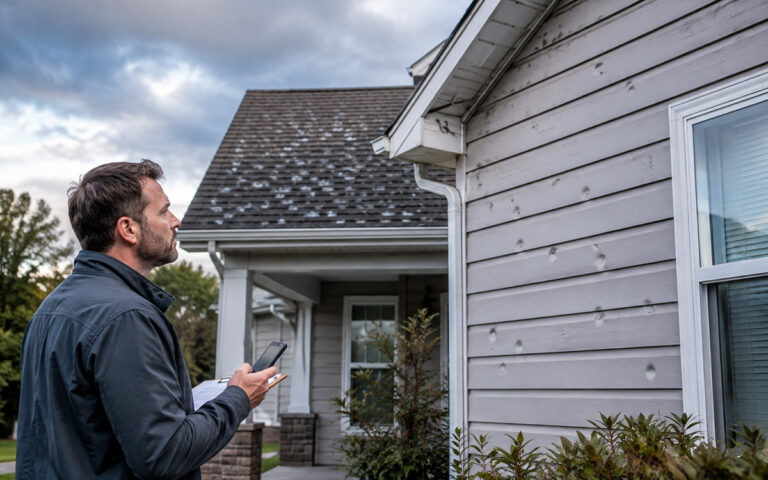
Hail is a good illustration. A storm can crack a shingle or bend a piece of flashing without any obvious leak showing up right away. Left alone, that same crack lets moisture in slowly for months. What should have been a routine hail claim turns into a fight over a full roof replacement, with the insurer asking why no one reported the damage when the storm occurred. Insurance Claim HQ’s resources on hail damage cover exactly what to look for, even when nothing looks wrong from the ground.
Pipe failures work the same way in reverse. A pipe that bursts outright is impossible to miss. A pipe that leaks slowly through a loose fitting or a hairline crack can go unnoticed for months, and the water damage, by the time it is found, often extends well beyond the pipe itself. According to Insurance Claim HQ’s guidance on pipe burst damage, these failures have several causes beyond a hard freeze, and insurers routinely dig into how long the underlying issue was present before anyone filed a claim.
That is exactly why a property check after any rough weather matters so much. A single afternoon of hail or a stretch of hard freezing temperatures can leave damage that is difficult to spot from the ground. Rather than climbing up to inspect the roof yourself, Insurance Claim HQ recommends bringing in a licensed roofer or inspector to handle that part. Homeowners should also check gutters, siding, and the foundation from ground level and run water through fixtures to make sure nothing is leaking behind a wall. Finding an issue within days rather than months is frequently what separates a claim that gets paid from one that gets fought.
The Myths Keeping People From Filing
Two assumptions keep more homeowners from filing valid claims than anything else. One is that any claim will drive up their premium. The other is that filing puts their policy at risk of cancellation. Neither is entirely false, but both get treated as ironclad rules far more often than reality supports.
A single, reasonably sized claim usually does not affect renewal at all. Non-renewal tends to follow patterns: several claims close together, or losses connected to documented neglect. Premiums are a somewhat different story. A claim does register as a future-risk signal to most carriers, and a modest rate increase at renewal is a realistic outcome. Even so, that increase is typically smaller than people fear, and it is nearly always cheaper than covering an unreported repair out of pocket and then losing a larger claim down the road because the damage was never on record.
Insurance carriers operate as large businesses with obligations to shareholders and profit targets to hit, and that context shapes how every claim gets reviewed.
“Navigating the complexities of insurance can be overwhelming, but with the right guidance, claimants can level the playing field,” Galen says.
Report It Now, Before It Gets Worse
Hail damage and pipe leaks teach the same lesson from different directions. A policy is designed to cover damage on the day it happens, regardless of whether that day involves a major hurricane or nothing more than an ordinary storm. Reporting damage the moment it is discovered serves a dual purpose. It puts a clear, dated record on file, and it keeps a small issue from growing into something an insurer can later argue about.
Homeowners who are unsure whether something is worth reporting or who are already dealing with a carrier slow-walking or lowballing a claim don’t need to sort it out on their own. Insurance Claim HQ offers free case evaluations and publishes educational resources through its storm damage resource center to help homeowners understand their coverage and protect their rights before minor damage turns into a denied claim.
About Insurance Claim HQ
Insurance Claim HQ is a premier property casualty insurance law firm powered by Hair Shunnarah Trial Attorneys and headquartered in Metairie, Louisiana. With hundreds of millions recovered for thousands of clients, the firm brings years of legal experience and unmatched insight into how insurers operate. Discover how they fight for policyholders at www.insuranceclaimhq.com